
Lumer Lecture by Serge Nicaise
Host: WG1
Date: 17 February 2026, 15:00 CET.
Title: Forty years of spectral theory on metric graphs
Abstract:
First, I will make a short introduction on Lumer’s life and career. I will recall some ”old” results on spectral theory on finite graphs, like characterization of the spectrum, spectral gaps, asymptotic behaviors and Weyl’s formula. I will finally mention some recent results for infinite graphs and indefinite operators. The main tools are the use of the fundamental solutions of the ODE and some algebraic manipulations, the min-max principle and the knowledge of the eigenvalues in some particular cases.

Lumer Lecture by Marco Marletta
Host: WG2
Date: 22 April 2026, 16:00 CET.
Title: Essential numerical ranges for unbounded operators & pencils, with applications to PDEs
Abstract:
This talk gives an introduction to essential numerical ranges for unbounded linear operators and (mostly linear) pencils and explain how they can be used to get a priori estimates on where the spectra of operators lie, and where spectral pollution might lie if we attempt to use numerical approaches to find spectra. The work is joint with S. Boegli, F. Ferraresso and C. Tretter; some of the applications build on earlier work with G. Alberti, B.M. Brown and I. Wood.
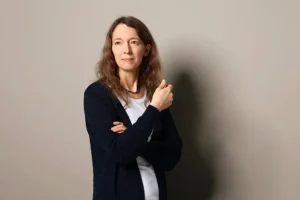
Lumer Lecture by Claudia Redenbach
Host: WG4
Date: 16 July 2026, 14:00 CEST.
Title: Stochastic modelling of microstructures
Abstract:
The investigation of random microstructures is of interest in many fields of research including materials science, biomedicine or geology. For instance, the properties of engineering materials such as foams, fibre composites or concrete are heavily influenced by the microstructure geometry. Similarly, abnormal changes in the blood vessel morphology due to a disease will influence the performance of organs such as the lung or the liver. Quantitative analysis of 3D images provided, e.g., by micro computed tomography allows for a characterization and comparison of microstructures. Based on characteristics derived from the image data, models from stochastic geometry can be fitted to the observed samples.
In materials science, such models can be used for virtual material design. Models allow for the simulation of large numbers of virtual materials samples of basically arbitrary size. Additionally, by changing the model parameters, samples with modified microstructure geometry can be generated. By finite element simulations of macroscopic materials properties, the influence of certain geometric characteristics on the material behaviour can be investigated. Repeating such microstructure generation-simulation cycles may then result in optimized materials’ properties.
Additionally, the use of microstructure models can also support the image processing and analysis. In particular, microstructure characterization typically requires segmentation of the components of interest. Neural networks have become common tools for this task. Training data are often produced by manual annotation of images which is time-consuming and error-prone, in particular in 3D. We propose to use synthetic training data that are obtained by combining a stochastic geometry model for the imaged structure with a model for the imaging process.
In this talk, we will summarize results of recent projects in our group giving several examples of stochastic microstructure modelling in the fields mentioned above.

Lumer Lecture by Barbara Niethammer
Host: WG3
Date: Tuesday, September 8, 2026, 2:00 PM CEST.
Title: Free boundary problems in models for cell polarization
Abstract:
Cell polarization denotes the rearrangement of certain substances on the membrane of a cell in response to an external chemical signal. It is a crucial ingredient in many biological processes, such as for example the motion of cells. Starting from a bulk-surface reaction-diffusion system for several protein densities describing this process, we rigorously derive nonlocal free boundary problems that allow for a relatively simple characterization of polarization. For these limit systems we prove global stability of steady states and characterize the parameter regime for the onset of polarization. We also discuss some results on localization which means that certain proteins concentrate in the region where the signal is maximal.
(based on joint work with S. Flores (Bonn), A. Logioti (Stuttgart), M. Röger (Dortmund) and J. Velázquez (Bonn))